Tuesday, December 6, 2011

THE GRAPES

(photos of grapes by my esteemed son in law Robert Miller)

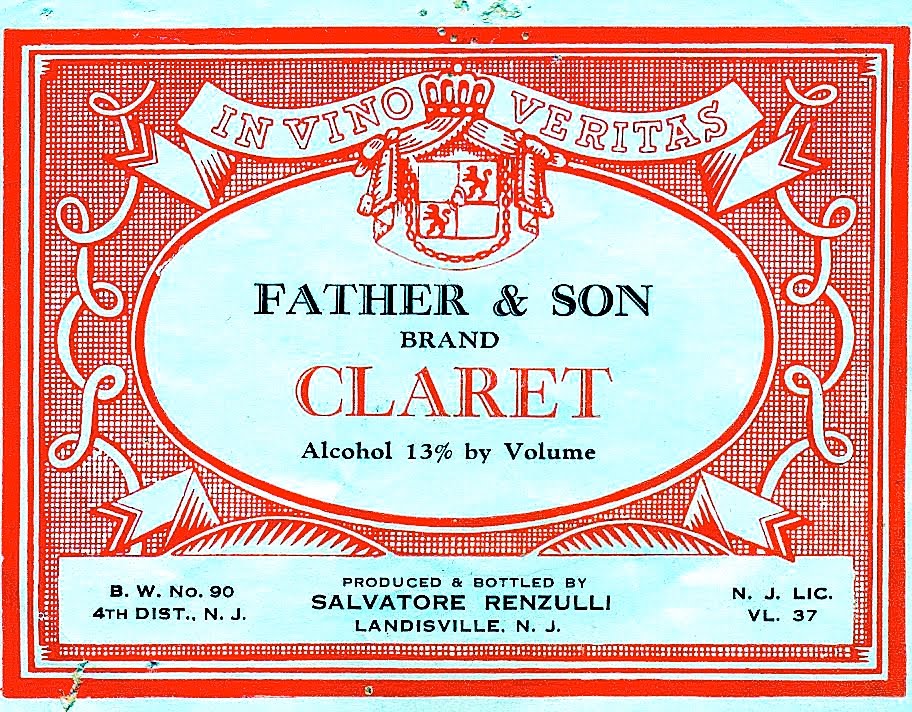
It wasn’t a vast vineyard, but to a very young boy it seemed endless. I suspect the gapes took up about an acre of land, perhaps a bit more. It is possible it was larger before prohibition ended the commercial wine making…long before I came on the scene. There are many things I remember fondly from my early childhood, the persimmon and pear trees, my pony, the family cow… but more than anything else, I miss the grapes. I loved to walk between the rows in the late summer when the grapes were ready for picking. The broad leaves reached above my head keeping out the sun while creating the perfect summer hide away for a little boy. But the real treasure was the delectable fruit, just hanging there waiting for me. My favorite grapes were in the first 3 rows, large yellow and light red grapes (Niagara?) that I could squeeze and pop the pulp out of the skin into my mouth. OMG they were good! The rest of the vineyard was given to the deep blue concord variety, also quite tasty right off the vine, but smaller and less juicy.

(Grandma Rondinelli visiting from Philly)


(The vineyard was located in the fields behind the barn which later became grazing land for the sheep.)

I have the faintest memory of harvesting the grapes…I was probably 5-6 years old and I remember a a lot of people walking through the rows with baskets filled with grapes. To pick the grapes my father put a funny ring on his middle finger; it had a curved blade on the top that was used to cut the stem with a simple swift flick of the wrist. The grapes were carried to the yard between our house and one of the barns where the press had been set up. Much to my dismay I cannot remember the actual pressing and the steps that obviously followed. I can say with authority that I never saw anyone stomping on the grapes. Another distressing gap in my memory is when the vineyard was removed, but maybe that’s good.


Ostensibly I am writing this to leave a record for my daughters, but the truth is, I relish the opportunity to replay these memories, always hoping that in the process I can dredge up one or two more that have been tucked away in the recesses on my mind. I remember talking to one of my uncles very late in his life, and how he seemed to confuse me with someone from his younger days and would talk endlessly about his distant past. If I live to be that old and my mind reverts back to those long ago days, I think I would be very happy.

Next....The Wine
Monday, December 5, 2011

12-5…Penne with roasted vegetables


INGREDIENTS:

Bell peppers
Asparagus
Carrots
Onion
Broccoli florets
Portabella mushrooms
Olive oil
Balsamic vinegar
Dried basil and oregano
Bacon

PROCESS:

Cook the bacon in the microwave until crisp, then chop.

Cut the veggies to provide the greatest surface area. Place in large bowl and mix well with olive oil, balsamic vinegar, herbs and spices, and marinate for an hour of longer. Place the veggies on a cookie sheet without overlapping one another and place on the middle rack in the oven set at 425 degrees. Roast for about 30-45 minutes, turning once during the process.

Toss the veggies with the cooked pasta, drizzle with olive oil and serve with Parmigiano reggiano cheese and the bacon bits.


COMMENTS:

I loved this…there is no other way to express it.

SUN LIT LANDSCAPE


Acrylic...24x30"


Detail

Sunday, December 4, 2011

I REMEMBER CHRISTMAS WHEN....

when my mother and I would take the bus to the city.


City Hall....Philadelphia...watercolor

I really don’t know if what I’m remembering is a combination of several trips to Philadelphia or the result of one trip. Which ever it is, the memories are etched clearly in my mind, especially the Christmas of the trains. I’m guessing I was somewhere between the ages of 8 and 10.

My mother grew up in Philadelphia…south Philly to be precise…and moved to the country in “Jersey” when she married my father, leaving her large, extended family in the city, some 30 miles away. It was a Christmas season in the mid to late 1940s and we were going to visit my grandmother.

The trip started with a walk from the farm to “downtown” Landisville where we took a bus to Vineland, some 7 miles away. There we boarded another bus for the trip to the city. I don’t remember much of the ride but I imagine it took about an hour and a half to reach the station on 13th street in center city. Our first stop was Wannamaker’s department store just a few blocks away, where I would see the only thing I considered important to the wellbeing of my young life, THE TRAINS. I don’t remember anything else about the store from that visit except looking up and seeing those beautiful trains running through towns and tunnels and over bridges and mountains with the shiny black locomotives blowing their whistles and puffing smoke. I was mesmerized, standing there imagining what I could do if only I had a set of trains. (On Christmas day I was to unwrap such a set of trains that, unknown to me, had been sitting in a plain box under my bed for weeks.)

Reluctantly I accompanied my mother on the next leg of our journey, a walk of several blocks to the Woolworth’s Five and Dime on Market Street where we would stop and visit my cousin Tessie. My mother was only a few years older than her niece and I think she was more like and older sister to Tessie. There were no electric trains for me to see, but there was something almost as exciting, an entire network of tubes hanging from the ceiling with small containers inside that with a single, silent swish could be sent anywhere in the store. I had never seen anything like that before.

From Woolworths we walked to 12th and Market to catch the trolley that would take us to Grandma’s house on Camac Street in south Philly. It may not have been a train, but it ran on tracks and made train like noises, and that was good enough for me, a boy from the farm in Jersey. So much excitement in just one day.

Camac Street is one of the tiny streets that run between the blocks throughout much of Philadelphia, especially in the older, central areas of the city, wide enough for a horse drawn wagon or one automobile. The brick houses were identical with their well-worn and well scrubbed marble steps all lined up with one another. They were one room wide, with a living room-dining room in the front and a small kitchen in the back. A stair way along the side led to a second floor. (Those homes with a third floor were referred to as “father – son – holy ghost homes.) My grandmother would greet us in her fractured English, dispense with the prerequisite hugs and kisses, and put on a pot of coffee. Then she, or my aunt Elanore, would walk to the corner market and return with the most incredible treats…salami, capocola, provolone, and fresh rolls. This feast would hold us over until dinner, spaghetti and meatballs that only my grandmother could make. (Sorry mom, yours were great, but hers were better.)

We would sleep in the bedroom facing the street, and I don’t know if it was on the second or third floor (I don’t even know if there was a 3rd floor…will have to ask cousin Danny.) My last memory of the trip was lying in bed and listening to the clippity clop of the horses as they pulled the milk wagons around in the wee hours of the morning.


Grandma Rondinelli

Saturday, December 3, 2011

THE FRUITS OF MY LABOR...TINY AS THEY MAY BE

Looking over my blog it appears that I've spent the last 2 weeks in the kitchen cooking and eating pasta, but I can assure you that is not the case. Not only have I been in the studio working...albeit not very hard...I have the proof of that labor to show you.


Out and about in Paducah

Thursday, December 1, 2011

12-1…Ravioli w light creamy tomato sauce

I locked the gallery door, turned the lights out in the studio, and walked across the breezeway to the kitchen. I knew immediately that tonight’s dinner had to be something requiring very little thought. I remembered we had a package of Buitoni ravioli in the freezer and decided on a quick tomato sauce and four cheese-chicken ravioli.


INGREDIENTS:

Ravioli
Crushed tomatoes
Olive oil
Garlic-onion
Fresh Parsley
Dry basil and oregano
Sweet Vermouth
Heavy whipping cream
Red pepper flakes

PROCESS:

Saute the garlic and onion with red pepper flakes in the olive oil. Then add the tomatoes, seasoning, and parsley and cook for about 5 minutes before adding a splash of sweet vermouth. Cover and cook over low heat for another 20-30 minutes (time is not critical).

While the pasta is cooking add enough cream to lighten the sauce just a bit and stir frequently. Serve the sauce over the ravioli and add parmigiano reggiano cheese.

COMMENTS:

A quick, easy, and delicious dinner.

WHY PADUCAH…TEN YEARS LATER

803 Madison St....our "dream" home

In 2001 I wrote in my journal…Why Paducah?

“One of my enduring fantasies over many years has been to have my own gallery as a part of my studio...open to the public and selling my art. I envisioned myself in a neighborhood/ community, where I could leave the house and walk “into town”, exchanging greetings with neighbors and other merchants. This has been my dream, and I believe Paducah offers me the opportunity to make it happen. Of course there are no guarantees, but there never are in life, only windows of opportunity, and it is up to us to be willing to act on them….

Within the past year the city opened a new art cinema, and more recently broke ground for a 34 million dollar performing arts center. All of these attractions, plus the Market St. Theatre, are located within 4 or 5 blocks of one another, along with several delightful restaurants, antique shops, and an elegantly restored B&B.

Patience and I will join a growing number of other artists in reviving an old Victorian neighborhood with our homes, studios, and galleries...as part of the city’s “artist relocation program”. Eventually there will be trolley service to the various studios and galleries.”

Lofty dreams and high hopes for both the city and myself. How did we fare? Ten years later I would offer that we did pretty well. Within a year about a dozen artists from all over the country responded to the city’s call and the excitement and anticipation in Lowertown were palpable. It quickly became a desirable place to live. More artists arrived, but the most telling sign of the neighborhood’s rebirth was the return of out of town and local non-artist citizens, a trend that continues today. Paducah, heralding itself as a creative art community, achieved national acclaim for its Artist Relocation Program, one that has become the prototype for communities around the country.

Lowertown was transformed…old homes were restored, new homes were built, new sidewalks and period lamp posts appeared, as well as galleries, shops, and restaurants; the people of Paducah made all of us feel welcomed and appreciated.

The performing arts center was completed, Maiden Alley Cinema introduced an annual film festival, the Paducah School of Art was born, and new restaurants opened downtown. Life in Paducah was good. A bustling arts district replaced the blight and decay of the neighborhood and Paducah was introduced to the phenomenon of opening receptions and gallery walks as the galleries welcomed visitors from regional cities (Chicago, Nashville, St. Louis, and Memphis). It wasn’t easy…selling fine art never is…but most of the galleries and studios survived, even if they didn’t thrive. Of course that level of energy and excitement could not sustain itself, and the growth slowed considerably as fewer available properties were available, and the neighborhood gradually assumed an air of maturity and stability.

As would be expected some of the transplanted artists realized Paducah was not meeting their needs, and they moved on, to be replaced by new faces with new hopes and new missions. Sadly, some left because of significant health issues. But the most crippling blow to the art community was the great economic recession. With fewer visitors and sales some of galleries were forced to close, joining hundreds of galleries throughout the country. Today there are still over a dozen galleries, shops, and studios that are open on the monthly gallery walk, and about half that number that are open with regular hours during the week. New artists continue to arrive in Lowertown, though not in the same numbers. The impact of the economic difficulties on our art community has been significant.
Fortunately there is more to Lowertown than the commerce of art.

If there is one word that captures the essence of Lowertown and explains the amazing success of the Artist Relocation Program it is community. Lowertown has become, and remains, an incredibly creative community, a place where artists can live and work together, inspiring and nurturing one another. This is, in my humble opinion, the result of the union of two forces: the influx of dozens of artists with different backgrounds and interests, and a city with a creative spirit, receptive and responsive to the promises of art. Although Lowertown is a physically prescribed area, this powerful sense of community and creative spirit have gradually erased artificial boundaries, creating one very exciting small river city, a city that has enriched my life and enabled my dreams.

That is “Why Paducah”.


803 Madison St....one year later